Forex Leverage Explained: The Benefits and Risks of High-Leverage Trading

Leverage is a powerful tool in Forex trading, allowing you to control a larger position in the market than what your initial capital might otherwise permit. This tool, however, is a double-edged sword—it can magnify your profits as well as your losses. Let’s dive into what leverage is, how it works, and how you can use it effectively in your trading strategy.
What is Leverage in Forex?
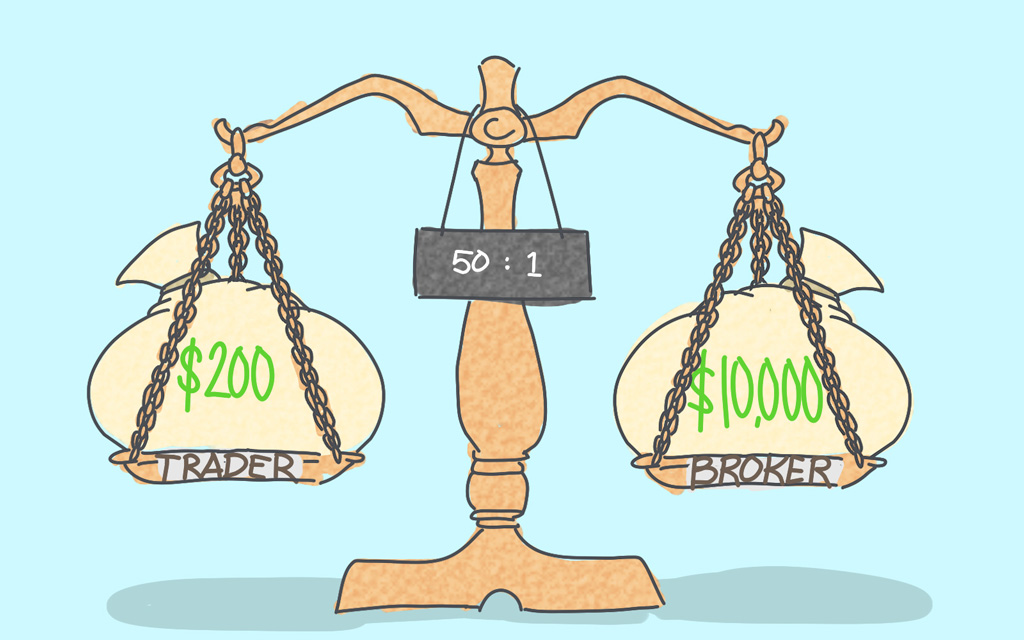
Leverage in Forex refers to the ability to control a large amount of money using a smaller amount of your own capital. For example, with 100:1 leverage, you can control a $100,000 position with just $1,000 of your own money. This is made possible through a margin trading account, where your broker lends you the necessary funds to increase your position size.
However, it’s crucial to understand that while leverage increases your potential for profit, it also amplifies your risk. The same force that can make you a lot of money can also lead to significant losses if not managed carefully.
How Does Leverage Work?
Leverage is offered by brokers in the form of a margin trading account. This account allows you to borrow funds to open a larger position than what your account balance would normally allow. The broker holds a portion of your funds as a margin or deposit to cover potential losses.
For example, if you have a $1,000 account and use 100:1 leverage, you can open a position worth $100,000. If the market moves in your favor, your profits are calculated on the full $100,000 position, not just your $1,000 deposit. However, if the market moves against you, your losses are also based on the full position size.
The Pros and Cons of Leverage
Leverage is attractive because it allows you to profit from small price movements. With leverage, even a tiny movement in the market can lead to significant gains. However, it’s important to recognize the risks associated with using leverage.
Advantages of Leverage:
- Increased Potential Profits: Leverage enables you to control larger positions, meaning even small market movements can result in substantial profits.
- Efficient Use of Capital: You can free up capital for other investments, as you don’t need to put down the full amount to control a large position.
- Enhanced Flexibility: Leverage allows you to trade larger volumes and diversify your trading portfolio without requiring a significant amount of upfront capital.
Disadvantages of Leverage:
- Amplified Losses: Just as leverage can increase your profits, it can also magnify your losses. A small adverse market movement can result in a significant loss, potentially exceeding your initial investment.
- Margin Calls: If the market moves against your position, you may face a margin call, where your broker requires additional funds to maintain the position or automatically closes your position to prevent further losses.
- Increased Risk: Leverage increases your exposure to the market, making risk management more challenging. Without a solid strategy, you could quickly find yourself in a losing position.
Calculating Leverage in Forex
To understand how much leverage allows you to control, let’s look at some examples.
100:1 Leverage: With 100:1 leverage, every $1 in your account allows you to control $100. So, with a $1,000 deposit, you can open a position worth $100,000. If the price of EUR/USD moves by 100 pips, your profit could be $1,000.
200:1 Leverage: Using 200:1 leverage, your $1,000 deposit would allow you to control a $200,000 position. If the EUR/USD pair moves by just 50 pips, you could still make a $1,000 profit—double the amount you’d earn with 100:1 leverage.
While these examples highlight the profit potential of using leverage, it’s crucial to remember that losses are magnified in the same way.
Managing Risk with Leverage
Risk management is key when using leverage in Forex trading. It’s essential to understand that there is such a thing as too much leverage. Overleveraging your account can lead to significant losses and margin calls, where your broker forces you to close positions due to insufficient funds.
Here are some tips to manage risk when trading with leverage:
- Use Stop-Loss Orders: A stop-loss order automatically closes your position if the market moves against you by a certain amount, limiting your losses.
- Stick to Risk Management Rules: Never risk more than 2% of your account balance on a single trade. This helps prevent significant losses that could wipe out your account.
- Avoid Overleveraging: Just because you have access to high leverage doesn’t mean you should use it all. Adjust your lot sizes to stay within your risk tolerance and trading strategy.
- Monitor Margin Levels: Keep an eye on your margin level to avoid margin calls. If your margin level drops too low, your broker may close your positions to prevent further losses.
How Much Leverage Should You Use?
The amount of leverage you should use depends on your trading experience, risk tolerance, and strategy. Contrary to what some may believe, more experienced traders often use less leverage, not more. They understand the risks involved and prefer to protect their capital by trading with lower leverage.
As a new trader, it’s advisable to start with lower leverage and gradually increase it as you gain more experience and confidence in your trading strategy. Always choose a leverage level that you are comfortable with and that aligns with your risk management plan.
Effective Use of High Leverage
If you decide to use high leverage, it’s crucial to do so effectively. This means using it in combination with sound risk management practices. For example, even if your broker offers 1:1000 leverage, it doesn’t mean you should use it on every trade. Instead, vary your position sizes to keep your risk consistent.
Also, be cautious of brokers offering extremely high leverage. Some brokers may offer high leverage to attract traders, but they might not have your best interests in mind. Unregulated brokers offering high leverage often run what’s known as a “b-book,” where they profit from your losses. Trading with a reputable, regulated broker can help ensure that you’re not being taken advantage of.
Final Thoughts on Using Leverage in Forex
Leverage is a powerful tool that can help you scale up your trading and potentially increase your profits. However, it’s also a double-edged sword that can lead to significant losses if not used carefully. To use leverage effectively, you must understand how it works, apply strict risk management, and avoid overleveraging your account.
Whether you’re a new trader or have years of experience, always remember that leveraging in Forex trading is not just about maximizing profits—it’s about protecting your capital and making informed, strategic decisions that align with your overall trading goals. By doing so, you can harness the power of leverage while minimizing the risks.